
Understanding Sciatica and Disc Bulges: How Chiropractic Care Can Help

If you’ve ever experienced sharp, radiating pain down your leg, numbness in your foot, or a deep ache in your lower back, buttocks, or groin, you may be dealing with sciatica—a condition that affects millions of adults every year. One of the most common causes of sciatica is a disc bulge or herniation, a spinal issue that can place pressure on the sciatic nerve or create severe inflammation around the nerve, leading to significant discomfort.
At East West Chiropractic, we specialize in helping patients find safe, effective, and drug-free relief from sciatica and disc-related pain. Here’s what you need to know about these conditions and how chiropractic care can support healing.
What Is Sciatica?
Sciatica is not a diagnosis itself but a symptom—specifically, pain that travels along the path of the sciatic nerve. This nerve is a grouping of 5 nerve fibers (L4-S3) that begins in the lower back, travels through the hips and glutes, and extends down each leg.
Common sciatica symptoms include:
- Sharp, shooting pain down the leg
- Tingling, numbness, or “pins and needles”
- Pain that is worse in the morning
- Muscle weakness in the leg or foot
- Burning or electric-like sensations
- Pain that worsens with sitting, coughing, or bending
Sciatica can be mild or debilitating, but in most cases, effective conservative care can significantly reduce symptoms.
What Is a Disc Bulge?
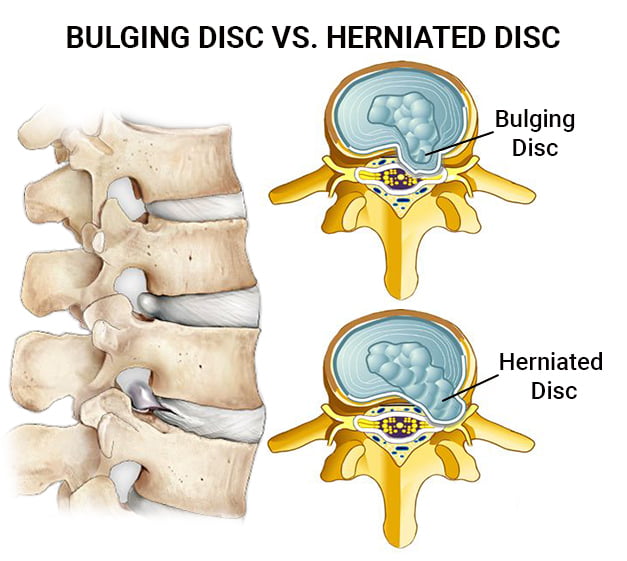
Between each vertebra in the spine sits a soft, cushioning disc that acts as a shock absorber. When the outer portion of a disc weakens or becomes damaged, the inner material may push outward—this is known as a disc bulge.
A bulging disc is still encapsulated by the outer part of the disc but the protrusion can press on nearby nerves, including the sciatic nerve, leading to inflammation and pain. On the contrary, a herniated disc is when the inner gel material pushes through the outer wall.
Common causes of disc bulges include:
- Age-related wear and tear: as we age our discs lose the ability to hold water making the disc weaker. This lack of hydration is what makes us shrink as we get older, losing up to 3 inches as the disc dehydrates and degenerates
- Twisting, bending, or lifting injury: the most common way to injure a disc is by bending AND twisting while lifting. Even light to moderately weighted items can create an injury. It is not uncommon to see disc injuries from simply bending over to pick up keys or putting on shoes.
- Poor posture or prolonged sitting
- Weak core or spinal muscles
Disc bulges can occur anywhere along the spine, but those in the lower back (lumbar spine) are the ones most likely to cause sciatica.
How Chiropractic Care Helps Sciatica and Disc Bulges
Chiropractic care focuses on restoring proper movement and alignment to the spine, reducing nerve irritation and promoting natural healing. Our personalized treatment plans are designed to address both the symptoms and the underlying cause.
1. Gentle Chiropractic Adjustments
Adjustments help improve spinal alignment, reduce pressure on irritated nerves, and enhance mobility. Many patients experience immediate relief after treatment.
2. Cox Flexion Distraction
Cox Tables are designed to gently traction the joint, decrease disc pain, and return normal function.
3. Spinal Decompression Therapy
This non-invasive technique gently stretches the spine, creating space for bulging discs to retract and heal. It also improves nutrient flow to the discs, supporting long-term recovery.
4. Pulsed Electromagnetic Field Therapy (PEMF)
Helps relieve sciatica by reducing inflammation, improving circulation, and promoting natural healing at the cellular level. The gentle electromagnetic pulses penetrate deep into the tissues around the sciatic nerve, helping calm irritated nerves, relax tight muscles, and support recovery from disc-related issues. Many patients experience decreased pain, improved mobility, and faster healing when PEMF is used alongside chiropractic care and therapeutic exercises.
5. Soft Tissue Therapy
Tight muscles and inflammation often accompany sciatica. Therapies such as; massage, aqua massage, ultrasound and e-stim help relax the muscles surrounding the sciatic nerve.
6. Corrective Exercises
Strengthening the core and stabilizing muscles reduces stress on the spine. Customized exercises also help prevent future flare-ups.
7. Posture and Ergonomic Guidance
Small lifestyle adjustments—improved workstation setup, better lifting mechanics, and posture training—can make a big difference in managing symptoms.
When to Seek Help
If your pain has lasted more than a few days, is worsening, or is affecting your daily activities, it’s time to schedule an evaluation. Early intervention can prevent a minor issue from becoming a chronic condition.
Find Relief and Restore Your Health
Living with sciatica or a disc bulge can be frustrating and limiting—but you don’t have to manage it alone. Our chiropractic team is here to help you understand your condition, develop a personalized treatment plan, and guide you toward long-lasting relief.
If you’re ready to take the first step toward healing, contact us today to schedule your appointment.