
Are your feet causing your back pain?
Are Your Feet Causing Your Back Pain?
When you think about the causes of back pain, your feet may not be the first thing that comes to mind. However, the way your feet contact the ground can have an impact on the alignment and movement of your entire body.
Your feet provide the foundation for your body. When they are not properly aligned, the effects can travel upward through the ankles, knees, hips, pelvis, and ultimately the spine. For some people, addressing foot alignment may be an important part of managing recurring back pain.
How Can Your Feet Affect Your Spine?
Every time you stand or take a step, your feet absorb and distribute forces created by your body and the ground. Ideally, these forces are distributed evenly. However, problems with foot alignment can alter the way your body moves.
One common example is overpronation, where the foot rolls excessively inward during walking or standing. This can cause the ankle and lower leg to rotate inward, which may affect the alignment of the knees and hips. Over time, these changes can influence the position and movement of the pelvis and lower back.
On the other hand, an overly rigid or high-arched foot may not absorb shock effectively. This can place additional stress on the legs and pelvis as your body compensates for reduced shock absorption.
These changes don’t necessarily mean that your feet are the direct cause of your back pain. Back pain can have many contributing factors. However, foot mechanics can be one piece of the overall picture, particularly when pain is associated with standing, walking, running, or other weight-bearing activities.
Signs Your Foot Alignment May Be Affecting Your Body
Some signs that your feet may be contributing to movement or alignment problems include:
- Uneven wear patterns on your shoes
- Feet that roll inward or outward when you walk
- Frequent foot, ankle, knee, hip, or lower-back discomfort
- One shoe wearing out faster than the other
- Frequent fatigue in your legs or feet
- Difficulty maintaining good posture while standing
- Pain that becomes worse after prolonged standing or walking
If you experience these symptoms, a professional evaluation can help determine whether foot mechanics may be contributing to your discomfort.
How Can Insoles and Orthotics Help?
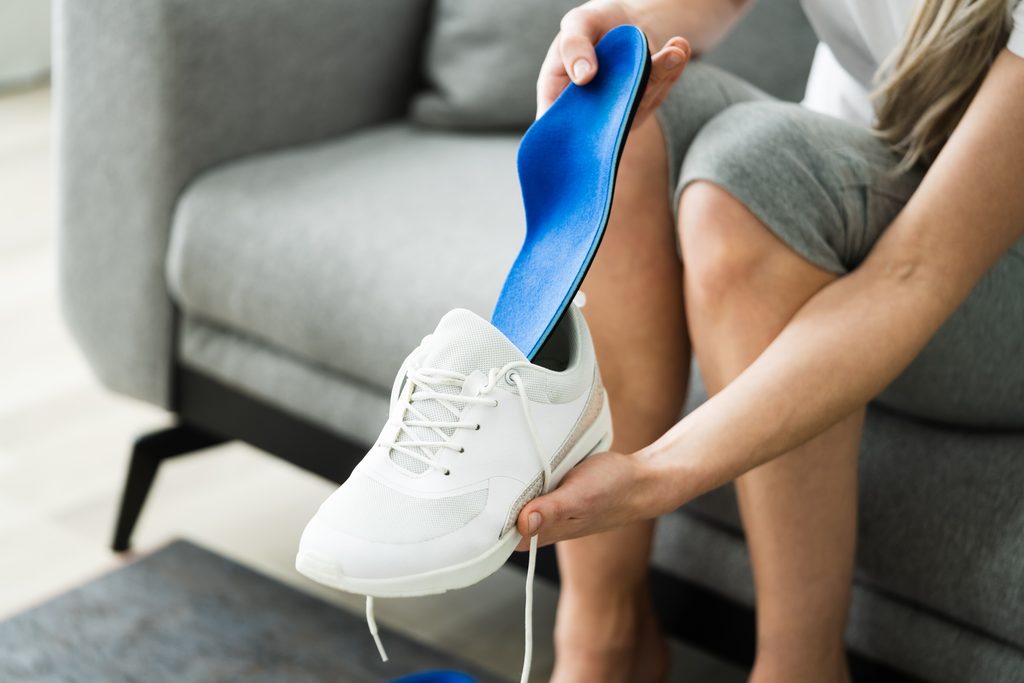
Insoles can provide additional cushioning, support, and stability inside your shoes. Depending on your individual needs, an appropriate insole may help distribute pressure more evenly across the foot and improve comfort during standing and walking.
Orthotics are devices designed to support or influence the mechanics of the foot. Depending on the individual’s needs, they may provide support to the arch, help redistribute pressure, improve stability, or accommodate specific foot characteristics.
Over-the-counter inserts can work for most people to correct biomechanics, however, some may need custom orthotics. Custom orthotics are designed based on an individual’s foot structure and functional needs. They may be recommended when a more specific level of support is appropriate.
Don’t Forget the Rest of the Body
While addressing foot mechanics can be helpful, back pain rarely has just one cause. Muscle weakness, poor movement patterns, previous injuries, prolonged sitting, physical activity, and other factors can all contribute to discomfort.
That’s why a comprehensive evaluation is important. Looking at the feet, ankles, knees, hips, pelvis, and spine together can provide a better understanding of how the body is moving as a whole.
Your feet are your foundation. When your foundation isn’t functioning optimally, the effects can sometimes be felt much farther up the body.
If you’re experiencing persistent back, hip, knee, or foot discomfort, schedule an evaluation to determine whether foot mechanics and orthotic support may be appropriate for you.